Value Investing

John templeton investment strategy

 

Sir John Templeton

Source: John Templeton Foundation

When we think of investors who changed the theory of investing, we might think of Warren Buffett who took the philosophy of value investing to previously unimaginable heights. We might also think of Peter Lynch who championed the individual investor who he believed could beat Wall Street.

We should also think of Sir John Templeton investment strategy, an investor who opened the world of investment opportunities to individual investors.

Templeton is a legend on Wall Street. He began his career at what many would consider to be a difficult time to break into the business, in 1938 as the market’s recovery from the Great Crash of 1929 was in question. The Dow Jones Industrial Average fell 50% that year, leading many to wonder if the bear market would ever end.

Rather than seeing despair, as always, Templeton saw opportunity. He followed a very simple investing strategy, always believing it was best to “buy low, sell high.”

Seizing an Opportunity to Buy Low

When the Second World War broke out in Europe in 1939, Templeton built a portfolio that would become the cornerstone of his legend.

At that time, he borrowed money to buy 100 shares of stock in each of the 104 companies selling at one dollar per share or less, including 34 companies that were in bankruptcy. Only four turned out to be worthless, and he turned large profits on the others. He was believed to have earned 200% on that portfolio in just a few years.

Templeton entered the mutual fund industry in 1954, when he established the Templeton Growth Fund. With dividends reinvested, each $10,000 invested in the Templeton Growth Fund Class A at its inception would have grown to $2 million by 1992, when he sold the family of Templeton Funds to the Franklin Group. In 1999, Money magazine called him “arguably the greatest global stock picker of the century.”
Franklin Templeton Investments

It was said that Templeton took value investing “to an extreme, picking nations, industries, and companies hitting rock-bottom, what he called “points of maximum pessimism.”

His philosophy of buying low and selling high was based on his outlook that markets would move between extremes. He said that “Bull markets are born on pessimism, grow on skepticism, mature on optimism and die on euphoria.”

A Global Outlook

Templeton earned his undergraduate degree at Yale, where he had worked to support himself and fund his education.  It was there that he developed his global investment philosophy.

He once told an interviewer, “In Tennessee I didn’t meet anybody who owned a share of anything. At Yale there were hundreds of boys from wealthy families, but not a single one who was investing outside one nation. I thought that was just not sensible. Surely they’d get better results if they searched everywhere rather than limiting their search to one country.”

That idea became a multibillion dollar investment firm.

When Templeton founded his firm, international investing was beyond the reach of individual investors. Now, of course, that has changed. Individuals can use exchange traded funds, or ETFs, to invest in foreign countries.

An ETF is a basket of stocks that generally tracks an index and is available to trade just like a stock. ETFs exist for many single countries, for geographic regions of the world, and for global indexes that track sectors in individual countries or across countries.

Individual companies are also available to individual investors as ADRs.

An American depositary receipt (ADR) is a negotiable certificate issued by a U.S. bank representing a specified number of shares (or one share) in a foreign stock traded on a U.S. exchange.

ADRs are denominated in U.S. dollars, with the underlying security held by a U.S. financial institution overseas, and holders of ADRs realize any dividends and capital gains in U.S. dollars, but dividend payments in euros are converted to U.S. dollars, net of conversion expenses and foreign taxes.

A Value Philosophy

No matter where in the world he was searching for potential investments, Templeton looked for certain characteristics in the companies he invested in. He was looking for value, growth, good management, and conservative management.
Templeton's Way With Money

To find value, many investors focus on the price to earnings (P/E) ratio. This is a measure of how much an investor is paying for $1 worth of earnings. Ideally, from Templeton’s perspective, the current P/E ratio should be less than the five year average P/E ratio for the stock. This shows the company is cheap.

But, the company should also be cheap relative to its competition. To measure this, the current P/E ratio should be below the average ratio of all companies in its industry. The industry can be measured with an index of stocks in the company’s home country or a global index.

To find growth, the focus should be on earnings per share (EPS). Templeton liked seeing EPS growth for each year over at least the last five years. It is best if EPS are projected to increase in the current year.

Again, there should be comparative strength in this metric. It’s not enough to find a good company. Templeton wants the best in the world. So, in addition to absolute EPS growth, additionally, the company should have forecasted earnings growth greater than the industry average.

To find good management, Templeton looked at the operating profit margin.

Operating margin is a margin ratio used to measure a company’s pricing strategy and operating efficiency.

Operating margin is a measurement of what proportion of a company’s revenue is left over after paying for variable costs of production such as wages, raw materials, etc. It can be calculated by dividing a company’s operating income (also known as “operating profit”) during a given period by its net sales during the same period.

“Operating income” here refers to the profit that a company retains after removing operating expenses (such as cost of goods sold and wages) and depreciation. “Net sales” here refers to the total value of sales minus the value of returned goods, allowances for damaged and missing goods, and discount sales.

The company’s operating margin should be better than its industry average and showing steady improvement over the past five years. This is Templeton’s preferred measure of management quality. When a company’s margin is increasing, it is earning more for each dollar of sales.

To find conservative management, Templeton looked at debt. Less debt than the industry average demonstrates to Templeton that the company is conservatively managed and likely to continue making money even in economic downturns. This is an important criterion for an investor who survived and in many ways prospered during the Great Depression.

Templeton may not be as popular as Buffett or Lynch or other investing legends. But, his work should still be studied by serious investors to learn about value investing.


Cryptocurrencies

Is the Selloff in Cryptos a Buying Opportunity?

Market declines follow a predictable pattern in some ways. Bears claim vindication. It doesn’t matter that large gains were possible before the decline or that large profits were taken. It also doesn’t matter that prices are still up compared to where they were a year ago.

When prices fall, bears like to say, “I told you so.”

That might seem like a good idea, but a better idea would be to ask “is this is a buying opportunity?” With the recent crash in cryptos, now is an ideal time to consider what cryptos might be worth.

Valuing the Potential Market Size

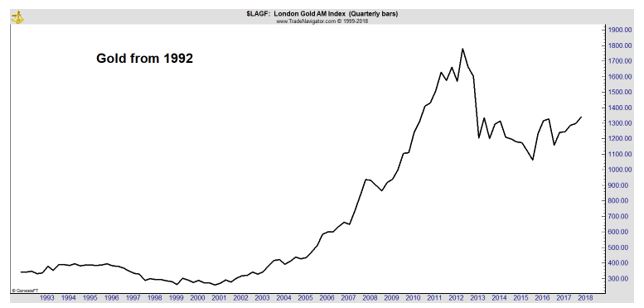
Cryptos don’t have earnings and they don’t generate cash flow. In this way, they are similar to gold. If you own gold, you know you are doing so to protect or grow wealth. You understand there are no potential dividends and if you own physical gold there could even be costs associated with holding the position.

Despite its shortcomings, gold has value.

Gold from 1992

That value fluctuates over time and there will be declines in value but, overall, gold always has some value despite the fact that there is no rational way to value gold.

However, there could be a target value for gold, or other assets that don’t generate cash flows. Many investors believe that they should place 5-10% of their portfolio into gold. Not all investors own gold so the likely percentage of wealth in gold is likely to be less than 5%.

Knowing how much gold is available for purchase and how much wealth there is in the world we could then derive a target value for gold.

Well, that same approach could be applied to bitcoin as one economist did. Tyler Cowen, of George Mason University, wrote:

“This estimate claims there is $241 trillion of wealth in the world, make of that what you will (there is something nonsensical about such aggregate measures because they are not traded against anything).  If you imagine people wish to hold one quarter of one percent of that in crypto form, that gets you to about $600 billion in value.”

How Well Does That Approach Work?

Let’s go back to gold. The World Gold Council estimates that all the gold ever mined totaled 187,200 tonnes in 2017. There are about 35,274 ounces in a metric tonne. With a gold price of about $1,330 per ounce, one tonne is worth about $46.9 million.

The World Gold Council estimates that about 40,000 tonnes of gold is held by private investors. This would be about $1.88 trillion worth of gold, or about 0.8% of wealth. When government holdings are added to the calculation, about 1.5% of wealth is in gold.

We know that many investors ignore gold and others gain exposure through mining stocks. The estimate of 1.5% of wealth in gold positions is most likely in line with the total holding of the metal, and exchange traded finds (ETFs) backed by the metal.

This approach is necessarily inexact but, based on the value of gold, this approach does seem to be a reasonable basis for valuing the aggregate holdings of an asset class that produces no cash flows of any kind for its investors.

Cryptos fit into that category. New reports from Venezuela indicate there is at least some degree of similarity between gold and bitcoin in a crisis. As one story noted:

“In the midst of a financial crisis with inflation nearing 2,000%, Venezuelans are using bitcoin to pay for groceries, medical bills, even honeymoons. Unaffected by the economic crisis, bitcoins gives users an alternative to black market worthless government currency.”

The same was true in Zimbabwe and in some ways, digital currencies may be more appealing than gold to many individuals as a crisis hedge. It’s more portable and can easily cross borders without being confiscated.

Valuing Bitcoin

Now, returning to Cowen’s estimates. He is most likely being conservative suggesting that investors will be allocating perhaps 0.25% of their wealth to cryptocurrencies. But, as with gold, the total will be smaller than expected because many investors will not participate in the market. It might be 0.5% or even 1% but is unlikely to be much more than that.

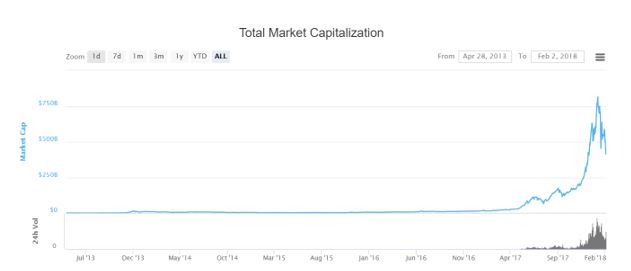
Recent data shows that the total market capitalization of all cryptos is about $507 billion. The market capitalization, or market cap, is equal to the cumulative value of digital currencies that are traded.

Total Market Capitalization

Source: CoinMarketCap.com

After the recent selloff, cryptocurrencies could be considered undervalued since they now represent less than 0.25% of total wealth. Of course, the value of total wealth will fluctuate as well over time and in fact could be lower than $241 trillion after the recent selloff in stocks.

However, gains in bonds will at least partially offset losses in stocks for many investors and other investors will benefit from trades in volatility products. Real estate assets could also increase in value. In other words, the real value of wealth will change but may not change as much as expected by some.

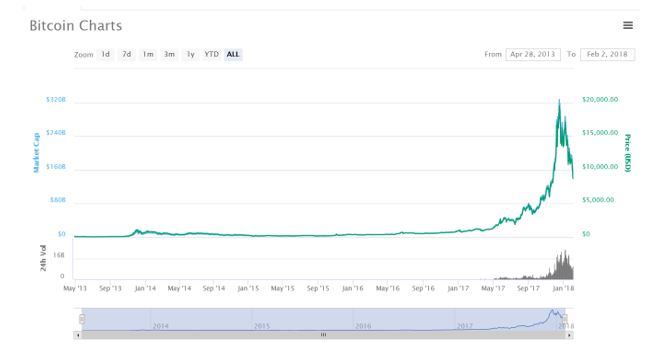
In cryptocurrencies, bitcoin represents about a third of the total market. That provides a target market cap of about $200 billion. Recent price declines have pushed the value of all outstanding bitcoins to less than $150 billion.

Based on that method, bitcoin is potentially undervalued by more than 30%.

Bitcoin charts

Source: CoinMarketCap.com

Now, at its peak, under this method, bictoin was potentially overvalued. The target value for bitcoin, using this valuation model, is about $11,800.

A Trading Approach

Of course, the method described here could be applied to any digital currency that is traded. According to one source, there are more than 1,500 currencies being traded. Each of these will have some share of the market and that market share could be used to find a target value.

This approach makes trading digital currencies similar to trading stocks in at least one way. Valuation would be the driving force behind buying and selling. This would be a disciplined approach to trading the market.

As a relatively young market, the concept of valuation might not be in widespread use. That should change, in time. But even before valuation models are generally accepted in the market, traders following a disciplined approach to buying and selling should have a better chance at profits than traders acting in an undisciplined manner.

We do know from more mature markets that disciplined investors tend to fare better over time. And there is no reason to expect that rule not to apply in new markets like cryptocurrencies.


Weekly Recap

Weekly Review

Can the Government Take Your Bitcoins?

Reading the words can be chilling for Americans. On April 5, 1933, the government confiscated the gold of American citizens. It didn’t even require an extensive debate or an act of Congress. This action was taken under an executive order, President Franklin Roosevelt’s infamous Executive Order 6102.

The purpose of the order was clear from its name, “Requiring Gold Coin, Gold Bullion and Gold Certificates to Be Delivered to the Government.

If the government can take your gold, can they also take your Bitcoin? Continue reading here. 

Beyond P/E Ratios: A Better Way to Evaluate Companies

The core of the value investing process is to apply a valuation tool to stocks in order to identify whether the stock if overvalued or undervalued. These metrics often combine a stock’s price with a piece of information found in the financial statements.
One example of a valuation metric is the price to earnings (P/E) ratio. To find the P/E ratio, analysts divide the price of one share of stock by the company’s earnings per share (EPS). In general, low P/E ratios generally define a stock that is undervalued and high P/E ratios are associated with overvaluation.

In this article, we discuss other effective valuation methods. Continue reading here

Watch For Mergers and Acquisitions, and Big Gains, In This Sector

Mergers and acquisitions (M&A) are among the events that move markets. But, M&A activity tends to be unpredictable. The recent acquisition of Dr Pepper Snapple Group, Inc. (NYSE: DPS) shows both the unpredictability and the potential rewards.

The announcement of the deal was a surprise. However, it was a pleasant surprise to share holders of DPS who saw the stock price rise by more than 32% on the morning the deal was announced.

Continue reading about this pleasant surprise and more, here

Real Estate Income Without Owning Real Estate

Investors often understand the value of a real estate investment. Property values tend to rise over time and can deliver steady income as they appreciate. Of course, real estate prices can fall, and they have fallen in the past, but investors can diversify to reduce the risk of price declines.

You can enjoy real estate income without actually owning real estate. Continue reading here. 


Passive Income

Real Estate Income Without Owning Real Estate

Investors often understand the value of a real estate investment. Property values tend to rise over time and can deliver steady income as they appreciate. Of course, real estate prices can fall, and they have fallen in the past, but investors can diversify to reduce the risk of price declines.

Diversified real estate investment portfolios might include a mix of rental properties scattered in several regions of the country along with exposure to undeveloped land and construction projects. Or, it could include a mix of residential and commercial properties.

No matter what it includes, a diversified real estate investment portfolio designed to generate passive income can be expensive and is, in all honestly, perceived to be beyond the reach of many individual investors.

Solutions to This Problem Are Available

Peer to peer real estate crowdfunding is s potential solution to some of the problems with real estate investing. In simple terms, these are “crowd investing” platforms that allow individual investors to fund part of a mortgage, land acquisition or construction loan or become a part equity owner.

This is perhaps not as well known an investment as stocks or bonds but it is a growing and there are a steady inflow of new competitors in this sector. That means you have the ability to select the platform that best meets your needs.

The exact structure of the platforms vary and we will look at just two of the options available to smaller investors to provide an overview of the sector. We will explore other options in this sector in future articles.

A Do It Yourself REIT

Many individual investors are familiar with real estate investment trusts or REITs. These are companies that own, operate or finance income-producing real estate. REITs often trade on major exchanges alongside stocks and exchange traded funds and provide investors with a liquid stake in real estate.

The advantages of REITs include diversification and liquidity. But, investors often pay steep fees for that liquidity. A crowd funding site like Fundrise is an alternative to this type of investment.

Fundrise allows individuals to invest online in commercial real estate via eREITs and eFunds. Individuals can gain access to real estate deals without the high dollar commitment typically needed, without being an accredited investor and without paying the high front-end load fees.

However, it is important to remember that these are illiquid investments which means that your investment capital could be tied up for years in a Fundrise account.

Investors can participate in real estate deals through Fundrise with as little as $500 of capital and they can receive monthly income through this platform. It is possible on many deals to reinvest dividends if you choose to in order to compound wealth.

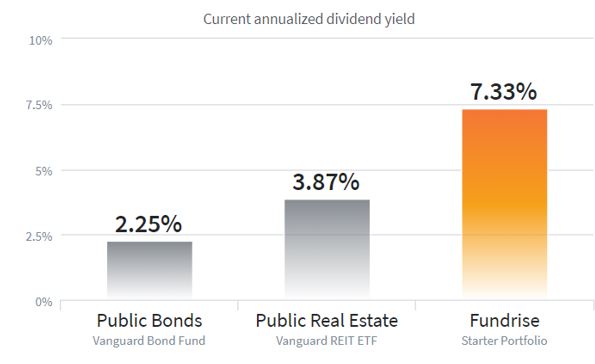
Returns can be higher for illiquid investments and this is true for a recent deal that Fundrise was offering. Investors with as little as $500 were able to obtain passive income at an annualized rate of 7.33% per year.

dividend yield

Source: Fundrise

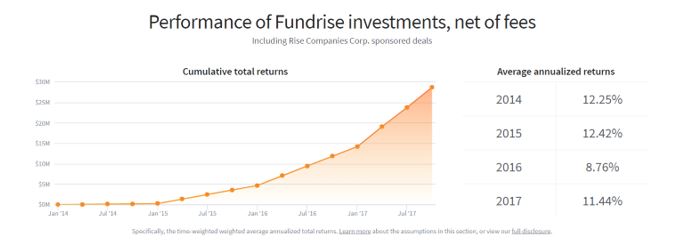
The company reports historic returns that exceed these projected amounts.

Fundrise investments


Source: Fundrise

Be A Hands On Real Estate Investors Without the Hassle of Owning Property

Groundfloor is a an online platform specializing in lending for single-family or small multi-family home rehab and renovation loans. The firm provides access to short-term, high-yield returns with a minimum investment of as little as $10. Typical loans return 6% to 14% annually and loans generally carry a term of six to twelve months.

A real estate investor secures a loan through Groundfloor rather than a traditional bank or a hard money lender to finance a residential real estate project. That borrower submits a loan application and after review, the loan is assigned a loan Grade A through G and a corresponding rate where Grade A loans are the least risky, with the lowest rate of return and Grade G loans are most risky.

Grade A loans generally offer returns of 5.5% and Grade G loans generally offer returns of 26% with each letter grade offering a rate within that range.

As an investor, you can browse the summary view of loans funding on the Groundfloor web site or view more information on the loan detail page for each loan. You decide when, how much, and where to invest money. Investing is simple and efficient.

With Groundfloor you are, in effect, allowed to create your own REIT. When you invest your money with a REIT, the REIT manages your risk and reward. With Groundfloor you choose how much, when, and in which projects to invest. You are in control of your money and you manage your own risk and reward.

To select investments, investors browse the web site which shows detailed information on properties and borrowers.

real estate

Source: Groundfloor

A Different Source of Passive Income

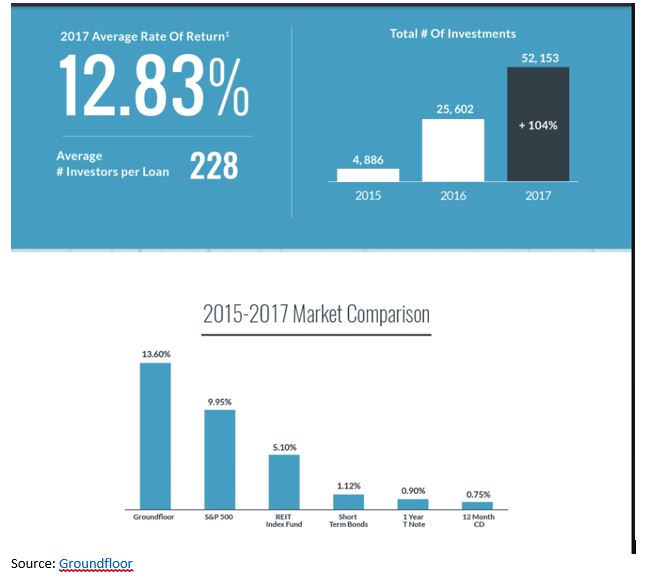
Using Groundfloor’s reported performance, we can compare this do it yourself REIT investment to multiple alternatives. On average, Groundfloor’s returns beat the stock market trading and fixed income investments.

market comparison

However, individuals will be able to determine how much risk they are willing to accept and that will have a large impact on their potential returns. While the 2017 average rate of return was 12.83%, it is important to remember that some loans earned more than that and others earned less than that.

This is obvious and is, in fact, how averages work, but it is a point that must be stressed. When making any investment, including investments for passive income through real estate, risks must be considered.

Company data provides information on loan performance in 2017. The data shows that 127 loans were current in their obligations or repaid in full. There were 31 identified as “subject to workout” and 1 identified as “subject to fundamental default.”

The precise meaning of these terms is available at the company’s web site and are of interest to potential investors, but our purpose is to highlight the risks associated with these investments.

Just one of the 159 loans in this sample was in the worst category, and that is a statistically admirable feat demonstrating that Groundfloor is performing due diligence on its loans and delivering extraordinary results for its investors.

However, we urge investors to consider what it would mean if that one loan was the loan they had invested in.

Crowd funding real estate is an investment opportunities that investors should be aware of and is something income investors should consider as a source of passive income. However, the risks should not be ignored and illiquidity should be considered when making the investment.

As always, consider both the potential gains and risks when making any investment.


Stock Picks

Watch For Mergers and Acquisitions, and Big Gains, In This Sector

Mergers and acquisitions (M&A) are among the events that move markets. But, M&A activity tends to be unpredictable. The recent acquisition of Dr Pepper Snapple Group, Inc. (NYSE: DPS) shows both the unpredictability and the potential rewards.

The announcement of the deal was a surprise. However, it was a pleasant surprise to share holders of DPS who saw the stock price rise by more than 32% on the morning the deal was announced.

Because of the possibility of outsized gains like that, some analysts are always on the hunt for potential deals. One analyst recently tapped the software industry as a potential source of M&A deals in the next few months.

Deal Making Could Soar

Deal making tends to go in and out of fashion. The reason for that is simply the potential for profits. Right now, conditions appear to be turning more favorable for deals.

One reason there could be more deals is simply because there is likely to be more cash available to complete the deals. Under the tax reform law that was passed at the end of last year, companies are repatriating cash from overseas.

The companies will get a lower tax rate on the cash that comes back but there is no longer an incentive to allow cash piles to grow to large levels. Before tax reform, holding cash was a tax avoidance strategy. That incentive no longer exists under the new rules.

One of the sectors that has the largest cash piles is the tech sector. Analysts are looking at software companies as a potential source of deals.

But, cash is not the only reason to expect M&A activity. A rising interest rate environment may temper stock market trading gains, making target companies look more affordable, says RBC Capital Markets. And, large software companies will aim to acquire promising technology or software designed for specific industries.

“Less multiple expansion, (overseas cash) repatriation and innovation tailwinds could drive a bigger M&A year,” said RBC Capital analysts in a report.

This would mark a reversal in the software industry. M&A slowed among software companies in 2017 as a booming stock market sent the trading multiples of possible targets higher, and as some looming buyers, including Microsoft (Nasdaq: MSFT), Oracle (NYSE: ORCL), Salesforce.com (NYSE: CRM) and privately held SAP, consolidated earlier acquisitions.

Oracle recently raised $10 billion in the bond market, giving it cash to tap for acquisition, noted Terry Tillman, a SunTrust Robinson Humphrey analyst in a report.

“Oracle has made its strategic intentions well known publicly and it includes maximizing growth opportunities associated with SaaS, Platform-as-a-Service (PaaS) and Infrastructure-as-a-Service (IaaS),” said Tillman in a report.

Adam Holt, analyst at MoffettNathanson, has some specific targets in mind. He believes some large companies are likely to acquire capabilities they lack right now instead of developing every software tool in house.

Holt identified Microsoft, Oracle and Adobe Systems (Nasdaq: ADBE) as companies that fit into category. He also believes VMware (NYSE: VMW) as another potential deal maker.

Dell Could Make a Deal With VMW

According to CNBC, Dell Technologies could emerge as a public company through a reverse-merger with VMware. The reverse merger, whereby VMware would actually buy the larger Dell, would then allow Dell to be traded publicly without going through a formal listing.

It would also likely be the biggest deal in tech industry history, giving investors who backed Dell’s move to go private in 2013 as a way to monetize their deal, while helping Dell pay down some of its approximately $50 billion debt.

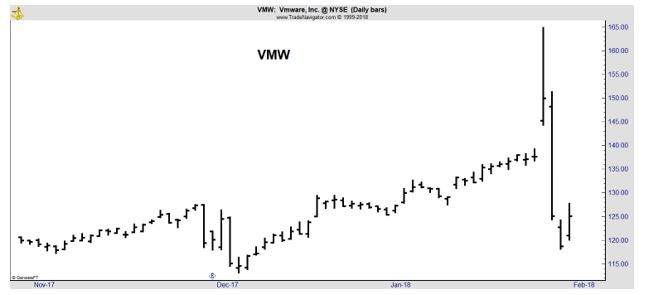
VMware’s stock fell sharply on the news but could be attractive after the sell off.

VMW

The stock now trades at about 22 times next year’s expected earnings and that doesn’t include potential benefits of a deal.

Watch the Hottest Companies

Some analysts noted that for many buyers, the focus is expected to be on fast-growing software-as-a-service, or SAAS, companies. The customers of SaaS vendors purchase renewable subscriptions, rather than one-time, perpetual software licenses. Customers receive automatic software updates via the web.

The SaaS software market rose 23% to $43 billion worldwide in the first half of 2017, according to data provided by market research firm IDC. The overall software market will grow 8.5% in 2017 and 2018, says Gartner, another market research firm. This means SaaS companies are gaining share overall.

While some SaaS markets are maturing, such as human resources and customer relationship management, SaaS companies are expanding into analytics, IT services, financial and other areas.

While revenue growth has been the strong point of many SaaS companies, Goldman Sachs says some could face top-line pressure going forward, making them more amenable to being acquired at the right price.

“Our view is that the wave of M&A is slowly beginning to build, and we would expect to continue to see a healthy dose of best-of-breed vendors consolidated into both legacy software vendors like Oracle and SAP, as well as ‘born-in-the-cloud’ vendors like Salesforce and Workday,” said a Goldman Sachs report.

Goldman Sachs says targets could include Zendesk (NYSE: ZEN), Cornerstone OnDemand (Nasdaq: CSOD), or HubSpot (NYSE: HUBS).

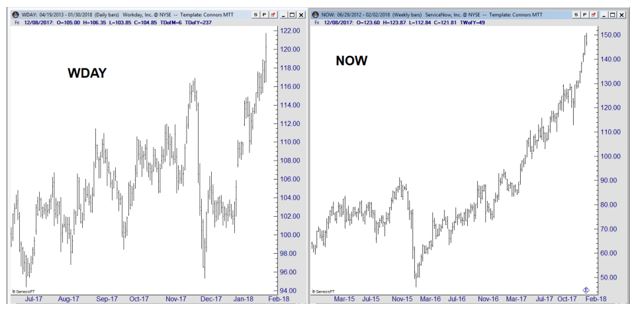
Holt, the MoffettNathanson, analyst, believes that Workday (Nasdaq: WDAY) and ServiceNow (NYSE: NOW) are on “several wish lists” but their valuation soared in the first nine months of 2017. Both stocks have been market leaders and remain richly priced.

WDAY and NOW

Workday sells software for human relations, payroll and other business functions. The company has expanded from the human capital management (HCM) into financial software.

Salesforce.com, a pioneer in SaaS, is also a potential target according to some analysts. The company sells software that helps businesses organize and handle sales operations and customer relationships. Salesforce.com has expanded into marketing, customer services and e-commerce.

Salesforce.com has forecast organic revenue growth over 20% through 2022. But, it could be a buyer, according to analysts at William Blair.

“There is the potential for a mega SaaS tie-up (Salesforce/Workday being the granddaddy of them all), though our sense is the odds are greater for acquisitions to be driven by the on-premise (Microsoft, Oracle) vendors,” said a William Blair 2018 outlook report.

One trend that could accelerate M&A within the software industry are partnerships with cloud computing vendors Amazon Web Services, Microsoft and Alphabet-Google.

AWS and Microsoft’s Azure service rent computing power and data storage to large companies via the internet. They’re also moving into software-related “PaaS”, or platform as a service, which involves selling apps that run on cloud infrastructure.

More large companies are shifting business workloads from private data centers to cloud computing services.

“PaaS is disrupting traditional enterprise software much faster than most realize,” said a Cowen report. It estimates that the PaaS market jumped 50% to $8.5 billion in the first half of 2017.

Acquisitions could deliver quick gains and investors should consider companies cited by top analysts as potential buys.


Value Investing

Beyond P/E Ratios: A Better Way to Evaluate Companies

Value investing is a simple process in theory. The goal is to find a stock that is priced at a discount to its fair value and buy it. Then, hold it until the stock is fairly valued or even overvalued and sell it. It’s simply a method of buying low and selling high which is one of the secrets to success on Wall Street.

In practice, value investing is a difficult process and consistent profits can be elusive for value investors. There are many reasons for that but one of the overlooked problems with implementing value investing is that investors might be looking at the wrong numbers to make their decisions.

We don’t mean that the financial statements are wrong. They may be, but as investors we must assume management is accurately and fairly presenting the data in those statements. What we mean is that investors might not be using the best tools to analyze the data.

Defining Value With a Popular Indicator

The core of the value investing process is to apply a valuation tool to stocks in order to identify whether the stock if overvalued or undervalued. These metrics often combine a stock’s price with a piece of information found in the financial statements.

One example of a valuation metric is the price to earnings (P/E) ratio. To find the P/E ratio, analysts divide the price of one share of stock by the company’s earnings per share (EPS). In general, low P/E ratios generally define a stock that is undervalued and high P/E ratios are associated with overvaluation.

The P/E ratio is popular and can be profitable. In part, the popularity could be due to its simplicity since just two pieces of data are needed to calculate the ratio. But, the simplicity could be a source of some of the problems with the ratio.

The P/E ratio looks only at earnings, a number which is found on the company’s income statement. It ignores information found on the balance sheet, for example, and there could be problems lurking in a company’s balance sheet.

Consider a company that has issued a large amount of debt. The debt is not directly factored in to the P/E ratio. But, eventually companies need to repay debt when the bonds reach maturity. If a company is unable to meet that obligation, the company could be forced into bankruptcy.

In theory, the risk of that should be factored into the stock’s price. However, investors relying solely on the P/E ratio would simply see a low value and could believe the stock was undervalued. Unfortunately, the low price could reflect a negative outlook for the company.

Moving Beyond the P/E Ratio

To overcome this limitation, many investors look at multiple indicators. They may look at the price to sales (P/S) ratio, the price to book (P/B) ratio or the price to cash flow (P/CF) ratio. All of these tools are useful, but all also reflect the information from just one part of the company’s financial statement.

A tool many investors ignore is the EV/EBITDA ratio. This is the enterprise value (EV) to earnings before interest, taxes, depreciation and amortization (EBITDA) ratio. It includes a great deal of information and could be among the best ways to measure value.

At least that was the conclusion the authors of an upcoming paper reached. Two researchers and money managers, Wesley Gray and Jack Vogel, will be publishing “Analyzing Valuation Measures: A Performance Horse-Race Over the Past 40 Years” in the Journal of Portfolio Management.

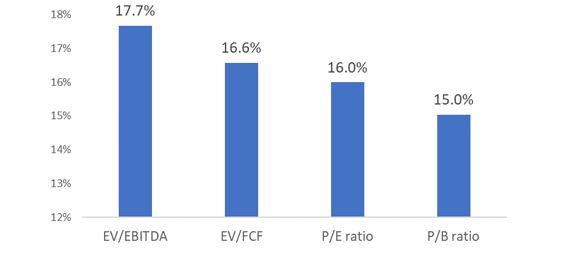
They have already shared their results in a book, Quantitative Value. In the book, they found that the EV/EBITDA has historically been the best performing metric and outperforms many investor favorites including the P/E ratio and the P/S ratio.

Their study looked at the period from July 1, 1971 until December 31, 2010. Some results are summarized below.

average return

Source: Gray and Vogel, Quantitative Value.

One reason the EV/EBITDA ratio may not be as popular as other tools is because it does involve more research to calculate.

The enterprise value of a company is a comprehensive measure of its market value. To calculate EV, you start with a company’s stock market capitalization (the number of shares times the market price). You then add the total amount of debt the company issued at current market value and subtract the amount of cash and cash equivalents they have on the balance sheet.

EV

This would represent the total cost of acquiring a company since a new owner would be acquiring the debt as well as the equity. Cash is subtracted in the calculation because it could be used to, at least partially, finance the purchase.

EBITDA is found by adding the expenses associated with interest, taxes, depreciation and amortization to the amount of net income.

EBITA


EBITDA shows the performance of a company independent of the performance of its decisions related to taxes and capital structure. Earnings, for example, are reduced in some companies through tax strategies or by issuing debt to fund growth. EBITDA neutralizes the effect of those actions.

This ratio is available at a number of sites, including popular research sites like Yahoo and Google.

Applying EV/EBITDA

This ratio is used in practice like any other valuation metric. Low values are generally considered to be better than higher values.

This means that if you are comparing possible investment opportunities, it can be best to consider the one with the lowest EV/EBITDA ratio as long as the opportunities are in the same industry. It is important to remember as with any valuation metric, the average value for a company will depend upon which industry it belongs to.

Fortunately, there is a resource showing the average EV/EBITDA for an industry. This data is maintained by Dr. Aswath Damodaran, a Professor of Finance at the Stern School of Business at New York University who has written extensively on valuation and corporate finance.

Admittedly, the EV/EBITDA ratio may be difficult to find than the other, more popular valuation metrics that are readily available. However, in the investment industry, a popular saying among analysts is that “to know what everyone knows is to know nothing.”

This saying means that knowing information that is readily available, such as the P/E ratio, is not going to generally be rewarded with excess profits. In order to excel in this competitive field, you will be better served by finding information that is less readily available and less widely used.

The EV/EBITDA is widely used among professional investment managers and among investment bankers completing mergers and acquisitions. However, it is not widely used by individual investors and that can provide an edge, or an extra degree of profits, to individuals willing to work a little harder in pursuit of profits.


Cryptocurrencies

Can the Government Take Your Bitcoins?

Reading the words can be chilling for Americans. On April 5, 1933, the government confiscated the gold of American citizens. It didn’t even require an extensive debate or an act of Congress. This action was taken under an executive order, President Franklin Roosevelt’s infamous Executive Order 6102.

The purpose of the order was clear from its name, “Requiring Gold Coin, Gold Bullion and Gold Certificates to Be Delivered to the Government.

The words were also clear. “I, Franklin D. Roosevelt, President of the United States of America, do declare that said national emergency still continues to exist and pursuant to said section do hereby prohibit the hoarding of gold coin, gold bullion, and gold certificates within the continental United States by individuals, partnerships, associations and corporations…”

Executive Order 6102

Citizens were required to turn over all gold to banks or government offices by May 1, just a few weeks after the order was issued. Violations, or the possession of gold, were subject to finds of up to $10,000 and up to ten years in prison.

Individuals were paid for their gold at the market price of $20.67 an ounce, equivalent to $398.03 in 2017 dollars.

Could It Happen Again?

Of course, the confiscation of gold happened more than eighty years ago. It seems unlikely that the government would repeat that process today. But, it is reasonable to consider whether or not the United States or other governments could confiscate bitcoins or other cryptocurrencies.

So far, several countries have threatened to regulate cryptocurrencies.

South Korea has been in the headlines with proposed regulations and rumors about the rules have sparked several bouts of selling in the global market. The country currently has no bitcoin regulation. But the government recently announced plans to deal with digital currencies including bitcoin and ether.

In August, a lawmaker introduced an amendment to the Electronic Financial Transaction Act that provides a regulatory framework for digital currencies. It outlines requirements and prohibited activities of anyone and entities dealing with digital currencies.

While bitcoin is not legalized, its use as a method of foreign exchange transfer for small amounts is. Financial technology companies in the country obtain a permit allowing them to legally offer Bitcoin international transfer services for small sums.

However, in a recent court case, traders received some good news that the coins cannot be confiscated. The court ruling said, “It is not appropriate to confiscate bitcoins because they are in the form of electronic files without physical entities, unlike cash…Virtual currency can not assume an objective standard value.”

In addition, the court continued, “it is difficult to calculate the value of the virtual currency even if it should be added. In some cases, even if virtual money is recognized as a criminal profit, it means that it should be calculated by calculating the corresponding amount instead of confiscation,” the publication conveyed the court’s explanation.

Regulation in the US

Obviously, a court ruling in South Korea is not binding on courts in the US. And, the US federal system adds a level of complexity to potential regulation.

The federal government has not yet claimed the right to regulate cryptocurrencies exclusively. The only concrete statements made about cryptocurrency from federal entities concern how people must report their profits (capital gains to the IRS), and how they’re taxed (as property).

In other words, the federal government, for now, is simply concerned about getting tax revenue.

Several states have jumped into the void and so far, New York, Arizona, Maine, Nevada, Vermont, and others have introduced bills to their state senates, mostly dealing with the acceptable use of blockchain ledgers and smart contracts for record keeping and other tasks.

The Securities and Exchange Commission (SEC) could also regulate cryptocurrencies. The agency has already reviewed requests to consider approving exchange traded funds (ETFs) based on cryptos. No approval has been granted and the SEC, in fact, has been asking important questions.

Specifically, in a recent letter, the SEC asked:

  • What steps would funds investing in cryptocurrencies or cryptocurrency-related products take to assure that they would have sufficiently liquid assets to meet redemptions daily?
  • How would funds classify the liquidity of cryptocurrency and cryptocurrency-related products for purposes of the new fund liquidity rule, rule 22e-4? For example, would any of these products be classified as other than illiquid under the rule?
  • If so, why?
  • How would funds take into account the trading history, price volatility and trading volume of cryptocurrency futures contracts, and would funds be able to conduct a meaningful market depth analysis in light of these factors?
  • Similarly, given the fragmentation and volatility in the cryptocurrency markets, would funds need to assume an unusually sizable potential daily redemption amount in light of the potential for steep market declines in the value of underlying assets?

These are important questions and in many ways should offer investors some level of assurance that the government would not consider confiscating or outlawing cryptocurrencies at some point.

This Times Is Different

As we all know, it’s not 1933 anymore. If the current president were to issue an executive order like the one Roosevelt signed, it would be challenged in court. Experts could argue over the likelihood of the success of the challenge.

But, the challenge itself would at the very least delay any government takeover of a cryptocurrency.

It is also to remember that markets have evolved since 1933 and were truly within a global marketplace. That means if the government moved to confiscate a cryptocurrency, traders could most likely obtain market value for their investments or even transfer the security to a location where trading was legal.

Short of confiscation, there are other steps the government could take.

In Germany, for example, bitcoin is considered a “unit of account” and its citizens are free to trade it as they wish. However, it’s also taxable and must incur Value Added Tax (VAT) when traded with euros.

Taxes could be imposed in a variety of ways and at a variety of levels. That could be the gravest threat to bitcoin trading.

After all, “the power to tax is the power to destroy,” Chief Justice of the Supreme Court John Marshall wrote in an 1819 case that was later cited by Chief Justice John Roberts in a more recent case.

It is the power to tax that could harm cryptocurrencies rather than the threat of government confiscation. And, taxes should be an area of concern for all traders.


To read more about cryptocurrencies and other market related topics, click here

Weekly Recap

Weekly Review

Cryptos as Part of a Balanced Portfolio

Individual investors often think of a balanced portfolio as one that holds stocks and bonds. One of the most popular approaches is to allocate 60% to stock market investments and 40% of the account’s value to fixed income or bond market investments.

Investment professionals tend to think of a balanced portfolio in terms other than stocks and bonds. They may add an allocation to real estate or commodities, for example. At the extreme are funds that diversify broadly.

Read more here:

https://www.smartinvestingsociety.com/cryptos-part-balanced-portfolio/

Investment Secrets of Peter Lynch

If you are new to investing, you may not be familiar with Peter Lynch. He was one of the world’s greatest investors, but he retired before great investors became celebrities and fixtures on CNBC.

His career began in the way many Wall Street careers began years ago. In 1966, Lynch was hired as an intern with Fidelity Investments partly because he had been caddying for Fidelity’s president, D. George Sullivan, at a local country club.

Read more here:

https://www.smartinvestingsociety.com/investment-secrets-peter-lynch/

Artificial Intelligence: From Buzzword to Investment Strategy

Investment news, and even general news stories, tend to be filled with exciting buzzwords about technology. There are driverless cars in our futures, computers that are replacing humans in the decision process and robots ready to take all of our jobs. The common theme in these technologies is artificial intelligence.

Artificial intelligence is simply the idea of using computer programs to duplicate the brain’s ability to learn and make decisions. We already use artificial intelligence, or AI, in many ways.

Read more here:

https://www.smartinvestingsociety.com/artificial-intelligence-buzzword-investment-strategy/

Passive Income From the Stock Market

Income is elusive in the current market environment. Interest rates are low as are the yields on stocks, in general. This means investors seeking income often need to accept more risks. However, income investors tend to be risk averse and that sets up a problem in this low interest rate world.

There are few absolute rules in investing, statements that are always guaranteed to be true. One of the absolute truths is that the only way to obtain a higher yield is to accept more risk. Income investors are forced to accept risk, but there are steps they can take to reduce risk.

Read more here:

https://www.smartinvestingsociety.com/passive-income-stock-market/


Passive Income

Passive Income From the Stock Market

Income is elusive in the current market environment. Interest rates are low as are the yields on stocks, in general. This means investors seeking income often need to accept more risks. However, income investors tend to be risk averse and that sets up a problem in this low interest rate world.

There are few absolute rules in investing, statements that are always guaranteed to be true. One of the absolute truths is that the only way to obtain a higher yield is to accept more risk. Income investors are forced to accept risk, but there are steps they can take to reduce risk.

A Reminder of the Risks of Dividend Investing

For equity investors, passive income is available in the form of dividends. However, dividends are not guaranteed. Even the dividends of companies considered to be blue chip, or very high quality investments, can be reduced or, at times, eliminated.

A recent example is in the case of General Electric (NYSE: GE). In November, the conglomerate announced that it was cutting its dividend in half. Analysts noted, the “dividend cut, only GE’s second since the Great Depression, shows the depths of the iconic company’s financial problems.”

This was important news to investors. GE is among the most widely held stocks. Many investors viewed it as a source of income. And, they learned that the income they relied on was not safe. It was a harsh reminder of the risks of investing in stock.

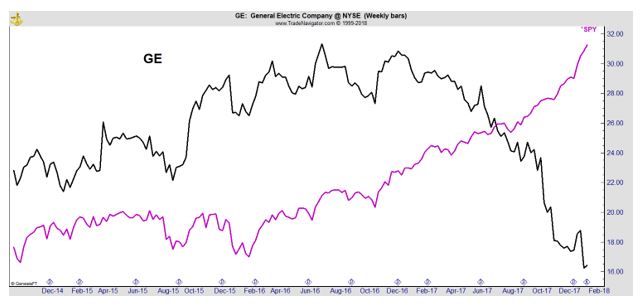
There were signs that the dividend was in trouble. The stock had been in a persistent down trend, even as the broad market had been rallying. This can be seen in the chart below where GE is shown as the solid black line and the S&P 500 is shown as the lighter colored line.

GE

A declining stock price is one sign of a dividend that is at risk. Stock prices reflect what investors believe the future prospects of a company are like. A down trend is a signal that the majority of investors are concerned about the company’s future.

Reducing the Risks of Dividend Investing

One way to avoid the risk of a dividend cut is to sell a stock when the dream beat of bad news becomes too loud to ignore. For GE, share holders saw stories that the company was planning to reduce the size of its board of directors in an effort to save money.

That is an unusual move and any news that seems to be unusual should be investigated. GE has announced plans to reduce the size of its work force. For a company that is in trouble, that is another negative sign.

GE will also be selling off some of its businesses. This marks a reversal in the company’s strategy which has been to complete acquisitions and grow in multiple businesses.

No single piece of news is decisive by itself. It’s the accumulation of news that an investor should pay attention to and in this case, GE was sending a signal that the business was in trouble.

There are also quantitative measures an investor can follow. These include cash flow and payout ratios. But, again, there is no single indicator involved and an investor must look at the numbers in context.

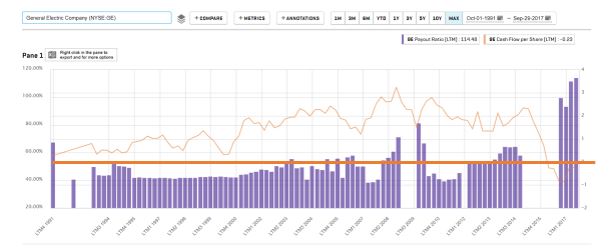
Below is a chart of GE’s cash flow per share and dividend payout ratio. Cash flow per share is shown on the right hand scale and is the solid line. The payout ratio is shown as bars and is measured with the left hand scale of the chart.

GE

Source: S&P

Cash flow per share is the after-tax earnings plus depreciation on a per-share basis that functions as a measure of a firm’s financial strength. Many financial analysts place more emphasis on the cash-flow-per-share value than on earnings-per-share values.

While an earnings-per-share value can be easily manipulated, cash flow per share is more difficult to alter, resulting in what may be a more accurate value of the strength and sustainability of a particular business model.

Of the two indicators, the payout ratio is the most important. The payout ratio is the proportion of earnings paid out as dividends to shareholders, typically expressed as a percentage. Ideally, this ratio should be below 50%.

In the chart above, the thicker horizontal line is drawn at the 50% payout ratio. As long as the ratio is below that number, the company should have sufficient resources to continue paying the dividend and reinvest in the business so it can grow the dividend.

When it is below 50%, investors should consider whether or not the company has positive cash flow. In the chart above, the thicker horizontal line also marks the difference between positive and negative cash flow per share. Negative cash flow indicates the dividend is in danger of being cut.

Hunting for Safe, Passive Income in the Stock Market

To help you find both safety and income, we found a free stock screening tool available at FinViz.com. At this site, you could screen for a variety of fundamental factors, including high dividends and low payout ratios. Specifically, we screened for dividends yields greater than 5% and payout ratios below 20%.

The site does not offer a screen for cash flow and we wanted to provide you with a free tool so we accepted that limitation. However, in an effort to reduce risk as much as possible, we then tightened the criteria for the payout ratio to less than 20%. This should provide a margin of safety.

We also restricted our screen to companies that follow US accounting standards. This is done by limiting the search to companies headquartered in the US. The reason for this is because accounting standards differ in other countries and additional analysis is required to ensure comparability.

You can, of course, change the parameters of the tool to find stocks that are comfortable for your personal levels of risk tolerance.

Stocks to Consider

Our passive income dividend screen identified five stocks:

  • BRT Apartments Corp. (NYSE: BRT) with a dividend yield of 5.1%.
  • CVR Refining, LP (NYSE: CVRR) with a dividend yield of more than 20% that does seem likely to be cut despite passing our quantitative screen. This highlights that no strategy is foolproof.
  • Hess Midstream Partners LP (NYSE: HESM) with a dividend yield of 5.7%.
  • Park Hotels & Resorts Inc. (NYSE: PK) with a dividend yield of 7.4%.
  • Taitron Components Incorporated (Nasdaq: TAIT) with a dividend yield of 6.1%.

Any of these stocks could be worth further research for investors seeking passive income in the current market environment.


Stock Picks

Artificial Intelligence: From Buzzword to Investment Strategy

Investment news, and even general news stories, tend to be filled with exciting buzzwords about technology. There are driverless cars in our futures, computers that are replacing humans in the decision process and robots ready to take all of our jobs. The common theme in these technologies is artificial intelligence.

Artificial intelligence is simply the idea of using computer programs to duplicate the brain’s ability to learn and make decisions. We already use artificial intelligence, or AI, in many ways.

You might be reading this article after learning about it through email. That means an email made it into your inbox. But, you probably take steps to protect your inbox with a spam filter. That filter is an example of AI at work.

In the early stages of development, spam filters used simple rules like “filter out xyz.” But, spammers realized that was happening and grew more sophisticated. That led to smarter filters, and then smarter spammers and a never ending battle is underway.

Spam filters need to continuously learn from the context of the message or other information contained in the email what is, and what isn’t, spam. The task is complicated by the fact that the filter needs to allow emails you want to receive through the filter.

Programmers use AI for that task with great success. Google reports that, “In fact, less than 0.1% of email in the average Gmail inbox is spam, and the amount of wanted mail landing in the spam folder is even lower, at under 0.05%.”

Of course, AI has more sophisticated applications and could be the theme of investment success for years to come.

Remember the Story of Levi Strauss

Levi Strauss achieved success in a memorable fashion. As the company explains:

“When news of the California Gold Rush made its way east, Levi journeyed to San Francisco in 1853 to make his fortune, though he wouldn’t make it panning gold. He established a wholesale dry goods business under his own name.”

Business schools can shorten the story to the simple idea that “you can mine for gold or you can sell pickaxes and blue jeans.” History shows that in the Gold Rush many of the miners failed to find their fortune.

The Levi Strauss of AI includes chipmaker Nvidia (Nasdaq: NVDA) which sells AI processors to internet and tech companies engaged in cloud computing. This gives it a leading position in the AI industry while retaining steady income from its biggest business which remains producing cards for PC graphics and gaming.

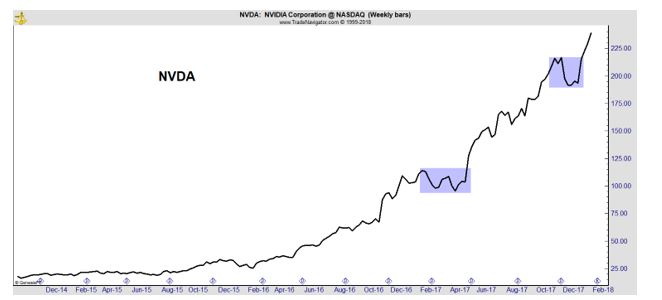
NVDA has been a stock market leader for some time.

NVDA


But, as the chart shows, the stock just broke out of a basing pattern which is highlighted in blue. This is similar to a pattern that formed last year, also highlighted in blue, which preceded a significant run in the stock.

“You hear Nvidia as probably the most horizontal play for AI, because it’s an enabling infrastructure for processing all the data,” said Derrick Wood, a Cowen & Co. analyst. “There are enablers and companies that are harnessing AI into their products, weaving it into the cloud in a way that they can monetize, like Salesforce. There’s data ingestion, helping companies pull in lots of data for processing.”

Salesforce Powers Businesses

Salesforce.com, inc. (NYSE: CRM) provides enterprise software, delivered through the cloud, with a focus on customer relationship management (CRM). The company focuses on cloud, mobile, social, Internet of Things (IoT) and artificial intelligence technologies.

Salesforce’s Customer Success Platform is a portfolio of service offerings providing sales force automation, customer service and support, marketing automation, digital commerce, community management, analytics, application development, IoT integration, collaborative productivity tools and its professional cloud services.

This all in one tool allows companies to increase productivity. This stock has also been a market leader in the past few years.

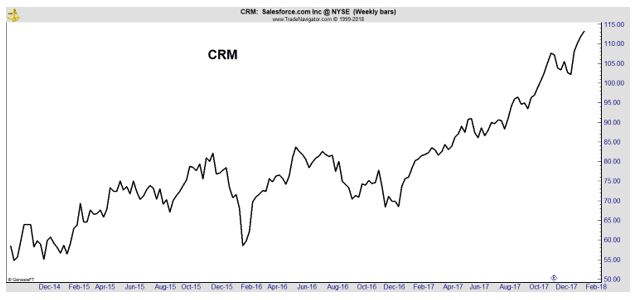
CRM

Like NVDA, the chart shows a recent breakout from a consolidation that appears to be point to more gains in the stock.

Big Blue Is Also In AI

International Business Machines Corporation (NYSE: IBM) is a leader in computer systems and has been for decades, since the computer was invented. It’s not surprising the company is also finding success in AI.

IBM Watson is an AI system with multiple applications. The software platform became well known when it appeared on the television show Jeopardy! in 2011. Watson competed against former winners Brad Rutter and Ken Jennings. The AI system won the first place prize of $1 million.

To compete on the show, Watson had access to 200 million pages of structured and unstructured content consuming four terabytes of disk storage including the full text of Wikipedia. It was not connected to the Internet during the game.

In February 2013, IBM announced that Watson software system’s first commercial application would be for utilization management decisions in lung cancer treatment at Memorial Sloan Kettering Cancer Center, New York City.

H&R Block also employs Watson. The technology “was used by H&R Block’s tax professionals in tax season 2017 to help deliver the best outcome for each unique tax situation, while helping clients better understand how different filing options can impact their tax outcome.”

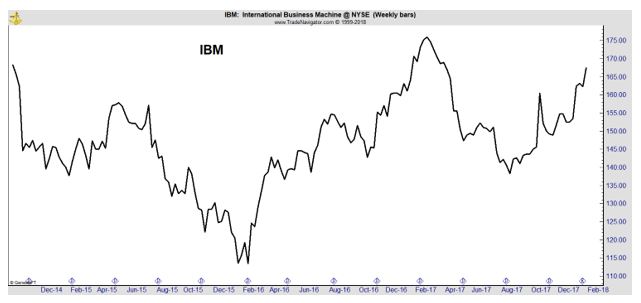
IBM could be attractive to value hunters. The stock is nearing a breakout point.

IBM

The List Goes On

Investors can also obtain exposure to AI through tech companies that use AI tools to make their own products to better. Video streamer Netflix (Nasdaq: NFLX) uses AI to make program recommendations to subscribers.

Payment processor PayPal (Nasdaq: PYPL) uses AI tools in fraud detection as do credit card giants Mastercard Incorporated (NYSE: MA) and Visa Inc. (NYSE: V). Banks are also using the technology to fight fraud and improve internal processes such as loan underwriting.

Social media giants including Facebook, Inc. (Nasdaq: FB) and Twitter, Inc. (NYSE: TWTR). These companies use AI in targeted advertising and facial recognition tools which drive, among others things, photo sharing apps.

These companies are also using AI to fight the problems they encountered in recent elections where fake news stories spread quickly.

The future most likely includes large winners in AI. Cowen & Co. analyst Woods noted “But, it’s very early. We haven’t seen many vendors with material monetization.” That means there will be losers, but potentially some very big winners in the sector.